
AIDP 2026

Speakers

Pathologists and clinicians, along with the researchers who build and test the models.

Presenters

Prof. Jing Zhang

Prof. Jing Zhang

Zhejiang University School of Medicine; The First Affiliated Hospital, Zhejiang University School of Medicine

Jing Zhang is an Endowed Professor and Chair of Pathology at Zhejiang University School of Medicine and Director of Pathology at its First Affiliated Hospital. His research investigates the mechanisms of Parkinson’s disease and dementia and develops biomarkers for early diagnosis and disease monitoring. Before joining Zhejiang University in 2020, he was an endowed professor at the University of Washington, where he also directed neuropathology. He earned his PhD in cell biology at Duke University and completed pathology training at Vanderbilt University.
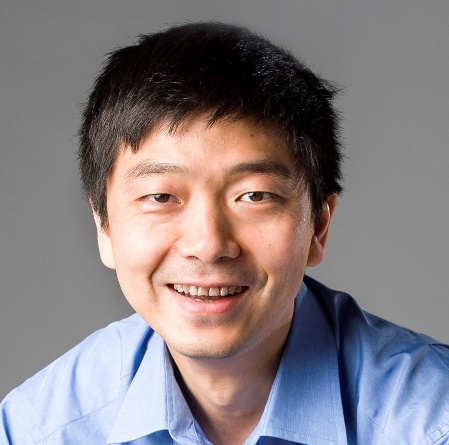
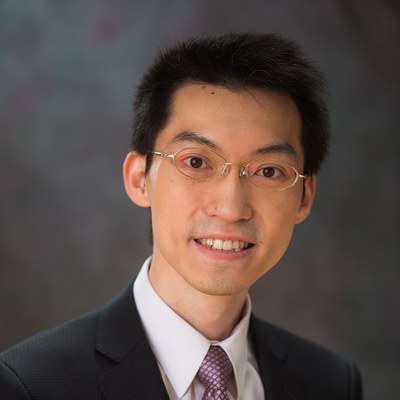
Dr. Hoifung Poon

Dr. Hoifung Poon

Recursion

Hoifung Poon, PhD, is Chief AI Officer at Recursion, responsible for the company’s end-to-end AI strategy and execution across drug discovery and clinical development. His work connects frontier AI research with real-world applications in biology and medicine. Before joining Recursion, he spent more than 15 years at Microsoft, where he led biomedical AI research and served as General Manager of Microsoft Research Health Futures. His research spans biomedical natural language processing, multimodal AI, real-world evidence, and precision health. He is also an affiliate faculty member at the University of Washington.

Prof. Kun-Hsing Yu

Prof. Kun-Hsing Yu

Harvard University

Kun-Hsing “Kun” Yu, MD, PhD, is an Associate Professor of Biomedical Informatics at Harvard Medical School and an Assistant Professor of Pathology at Brigham and Women's Hospital. He pioneered one of the first fully automated AI algorithms for extracting thousands of features from whole-slide pathology images. His lab integrates quantitative histopathology with genomics, epigenomics, transcriptomics, and proteomics to predict clinical outcomes in cancer, and has identified cellular morphologies associated with patient prognosis. His AI methods have been independently validated by more than 200 research groups. He is a Fellow of the American Medical Informatics Association and has received the NIH Maximizing Investigators' Research Award, a Google Research Scholar Award, and an American Cancer Society Research Scholar Award. He earned his MD from National Taiwan University and his PhD in Biomedical Informatics from Stanford University.

Prof. Zhi Huang

Prof. Zhi Huang

Perelman School of Medicine, University of Pennsylvania

Zhi Huang, PhD, is a tenure-track Assistant Professor at the University of Pennsylvania. He previously completed a postdoctoral fellowship at Stanford University under Professors James Zou and Thomas Montine and earned his PhD from Purdue University. Dr. Huang is a rising star in vision-language models for pathology. He is the lead author of the landmark Nature Medicine (2023) cover article on PLIP (Pathology Language-Image Pretraining), which utilized medical social media data to train AI. His research focuses on human-AI collaboration and the development of foundation models that enhance diagnostic accuracy and knowledge sharing in digital pathology.

Prof. Yanxiang Deng

Prof. Yanxiang Deng

Perelman School of Medicine, University of Pennsylvania

Yanxiang Deng, PhD, is an Assistant Professor of Pathology and Laboratory Medicine at the Perelman School of Medicine, University of Pennsylvania, and a core member of the Penn Epigenetics Institute. He earned his PhD in mechanical engineering from Rensselaer Polytechnic Institute and completed postdoctoral training in biomedical engineering at Yale University. His lab develops microfluidic, imaging, and computational technologies for spatially resolved single-cell omics, profiling the genome, epigenome, transcriptome, and proteome within intact tissue architecture. These tools are applied to cancer, neurodegenerative disease, and other complex biological systems.

Dr. Ronald Cheong Kin Chan

Dr. Ronald Cheong Kin Chan

The Chinese University of Hong Kong; Hong Kong Hospital Authority

Dr. Cheong Kin Ronald Chan is a Consultant at the Hospital Authority, NTEC (Pathology), and Lab Director of North District Hospital, as well as an Honorary Clinical Associate Professor at the Department of Anatomical and Cellular Pathology, The Chinese University of Hong Kong. He leads the Pathology Artificial Intelligence Development and Assessment Laboratory. Dr. Chan has published numerous papers in reputable journals and conferences, contributing significantly to the fields of digital pathology and artificial intelligence. His work includes over 30 publications, with notable journals such as Diagnostic Cytopathology, The Oncologist, and Advanced Science. He has received several awards, including the Teachers of the Year Awards from the Faculty of Medicine, CUHK in 2021 and 2023. Dr. Chan has also been involved in multiple grants related to digital pathology and AI, serving as Principal Investigator on several key projects.

Prof. Hei Ming Lai

Prof. Hei Ming Lai

Department of Chemical Pathology, The Chinese University of Hong Kong

Prof. Hei Ming Lai is a clinician-scientist affiliated with the Department of Chemical Pathology at The Chinese University of Hong Kong. His research develops tissue-clearing, three-dimensional imaging, and spatial biology technologies for clinical applications. His team developed a scalable pipeline for multiplexed molecular mapping of intact tissues, supporting precision diagnostics in oncology and rheumatology through 3D digital pathology. He graduated in medicine from The University of Hong Kong in 2018 and received a 2024 Croucher Tak Wah Mak Innovation Award.

Prof. Zhenqin Wu

Prof. Zhenqin Wu

School of Computing and Data Science, The University of Hong Kong

Zhenqin Wu is an Assistant Professor in the School of Computing and Data Science at The University of Hong Kong. His research develops artificial intelligence and deep-learning methods for understanding spatial biology, including spatial proteomics, transcriptomics, and histopathological imaging. He earned his PhD at Stanford University, working with James Zou and Vijay Pande on computational chemistry and biology, and previously received a bachelor’s degree in chemistry from Peking University. His current interests also include LLM-powered agents for spatial-biology discovery.

Prof. Li Liang

Prof. Li Liang

Nanfang Hospital, Southern Medical University

Li Liang is Professor and Director of Pathology at Nanfang Hospital, Southern Medical University, and leads the Department of Pathology in the university’s School of Basic Medical Sciences. Her research focuses on diagnostic and therapeutic biomarkers associated with tumour metastasis and drug resistance, alongside AI-assisted pathology for predicting tumour evolution and evaluating prognosis and treatment. She has led national research projects and published in Gastroenterology, Journal of Hepatology, Molecular Cancer, and Nature Communications. Her work connects molecular tumour pathology with clinical translation.

Prof. Tingying Peng

Prof. Tingying Peng

Technical University of Munich; Helmholtz AI Young Investigator Group

Dr. Tingying Peng leads a Helmholtz AI Young Investigator Group working on AI for microscopy and computational pathology. Her research develops interpretable deep-learning methods for microscopy and histopathology images, addressing data scarcity, domain shift, and the need for clinically explainable models. Her work spans brightfield, fluorescence, and 3D microscopy, with a focus on helping life scientists and pathologists extract more reliable information from images.

Prof. Maximus Chun Fai Yeung

Prof. Maximus Chun Fai Yeung

Department of Pathology, The University of Hong Kong

Maximus Chun Fai Yeung is a Clinical Assistant Professor in the Department of Pathology at The University of Hong Kong, an Honorary Associate Consultant at Queen Mary Hospital, and Director of the HKU Sarcoma Research Laboratory. His research combines multiomics, single-cell profiling, organoid models, and computational pathology to identify diagnostic, prognostic, and therapeutic biomarkers in sarcomas. He also develops deep-learning approaches for whole-slide image analysis and studies liquid biopsy for non-invasive sarcoma diagnosis and monitoring. He graduated in medicine from HKU in 2014.

Prof. Hao Chen

Prof. Hao Chen

The Hong Kong University of Science and Technology

Hao Chen is an Assistant Professor in the Department of Computer Science and Engineering, with appointments in Chemical and Biological Engineering and Life Science, at The Hong Kong University of Science and Technology. He leads the SmartX Lab, focusing on large and trustworthy AI for healthcare, and serves as Director of the Collaboration Center for Medical and Engineering Innovation. His research includes computational pathology, medical image analysis, multimodal learning, and bioinformatics. He received his PhD from The Chinese University of Hong Kong in 2017 and received the MICCAI Young Scientist Impact Award in 2019.

Prof. Mingyao Li

Prof. Mingyao Li

Perelman School of Medicine, University of Pennsylvania

Mingyao Li, PhD, is a Professor of Biostatistics, Statistics and Data Science, and Digital Pathology at the University of Pennsylvania, where she directs the Statistical Center for Single-Cell and Spatial Genomics. Her research develops statistical and computational methods for single-cell and spatial transcriptomics, statistical genetics, and computational pathology, including machine-learning approaches that integrate histology images with molecular data. She is a Fellow of the American Statistical Association and the American Association for the Advancement of Science, and an elected member of the International Statistical Institute. She has published more than 200 peer-reviewed papers, including work in Nature Genetics, Nature Methods, Nature Biotechnology, Science, and The Lancet, and was named to The Pathologist’s 2024 Power List for her contributions to integrating spatial transcriptomics with histopathology.

Dr. Mak Siu-Ming

Dr. Mak Siu-Ming

Tuen Mun Hospital, Hospital Authority; The Hong Kong College of Pathologists

Dr. Mak Siu-Ming is Chief of Service of the Department of Clinical Pathology at Tuen Mun Hospital, Pok Oi Hospital and Tin Shui Wai Hospital, and President of The Hong Kong College of Pathologists. His clinical expertise encompasses anatomical pathology and genetic and genomic pathology. He graduated from The Chinese University of Hong Kong in 2001 and completed specialist training at Alice Ho Miu Ling Nethersole Hospital and North District Hospital. He has contributed to pathology laboratory development and specialist education, including chairing the College’s Training and Examinations Committee from 2021 to 2023.

Prof. Joshua Jing Xi Li

Prof. Joshua Jing Xi Li

The University of Hong Kong

Prof. Joshua Jing Xi Li is a pathologist and researcher at the University of Hong Kong. His work spans breast cancer pathology, the tumor microenvironment, and AI-assisted analysis of histology. His publications include studies of pathologic assessment in breast cancer, phyllodes tumors, and prognostic markers, linking traditional histopathology with modern computational approaches.

Prof. James Zou

Prof. James Zou

Stanford University

James Zou is an Associate Professor of Biomedical Data Science at Stanford University, with courtesy appointments in Computer Science and Electrical Engineering. His research develops reliable, human-compatible, and statistically rigorous artificial intelligence, with applications in biomedicine and healthcare. He received his PhD from Harvard University in 2014 and joined Stanford in 2016, following appointments at Microsoft Research and the University of California, Berkeley. His research has been recognized through Chan Zuckerberg Biohub Investigator Awards, a Sloan Research Fellowship, and an NSF CAREER Award.

Dr. Richard Chen

Dr. Richard Chen

AstraZeneca

Richard J. Chen is Head of Multimodal AI at AstraZeneca and was previously the founding Chief Technology Officer of Modella AI. His research focuses on multimodal and generalist artificial intelligence for computational pathology. He has led development of PORPOISE for integrating pathology and genomic data, HIPT for gigapixel self-supervised learning, and UNI, a pathology foundation model. He earned his PhD in Biomedical Informatics from Harvard Medical School and holds a bachelor’s degree in Biomedical Engineering and a master’s degree in Computer Science from Johns Hopkins University.

Prof. Terence Tsz Wai Wong

Prof. Terence Tsz Wai Wong

Department of Chemical and Biological Engineering, The Hong Kong University of Science and Technology

Terence Tsz Wai Wong is Associate Head and Associate Professor in the Department of Chemical and Biological Engineering at The Hong Kong University of Science and Technology. His research interests include biomedical engineering, bioinstrumentation, bioimaging, and medical imaging systems. He received his BEng and MPhil from The University of Hong Kong and his PhD in Biomedical Engineering from Washington University in 2018. He serves as Associate Director of the Center for Medical Imaging and Analysis and founded PhoMedics Limited to develop technologies for rapid and accurate histological imaging.

Prof. Jiguang Wang

Prof. Jiguang Wang

Division of Life Science; Department of Chemical and Biological Engineering, The Hong Kong University of Science and Technology

Jiguang Wang is a Professor in the Division of Life Science and the Department of Chemical and Biological Engineering at The Hong Kong University of Science and Technology. He established the Wang Genomics Laboratory at HKUST in 2016, applying data science to biology and medicine. His research integrates multi-omics, statistics, and machine learning to investigate cancer evolution, therapeutic resistance, and genomic alterations in brain tumors and vascular malformations. He received his PhD from the Chinese Academy of Sciences and conducted postdoctoral research at Columbia University before joining HKUST.

Prof. Peter J. Schüffler

Prof. Peter J. Schüffler

Technical University of Munich

Peter J. Schüffler is Professor of Computational Pathology at the Technical University of Munich. His research develops machine-learning methods for cancer detection, segmentation, and grading in pathology images, alongside prediction of prognostic markers and treatment response. He also investigates digital-pathology visualization, automated quality assurance, and integration into clinical, research, and educational workflows. He earned his doctorate at ETH Zurich in 2015 and subsequently worked at Memorial Sloan Kettering Cancer Center as a postdoctoral researcher and senior machine-learning scientist. He co-founded Paige and joined TUM’s professorship in 2021.

Prof. Lequan Yu

Prof. Lequan Yu

School of Computing and Data Science, The University of Hong Kong

Lequan Yu is an Associate Professor at The University of Hong Kong, where he directs the Medical AI Lab. His research connects artificial intelligence and healthcare through algorithms for biomedical data analysis, with an emphasis on medical imaging, multimodal learning, computational pathology, and precision oncology. His work also addresses generalizable, trustworthy, and fair learning from imperfect biomedical data. Before joining HKU, he was a postdoctoral research fellow at Stanford University. He received his PhD from The Chinese University of Hong Kong in 2019 and BEng from Zhejiang University in 2015.